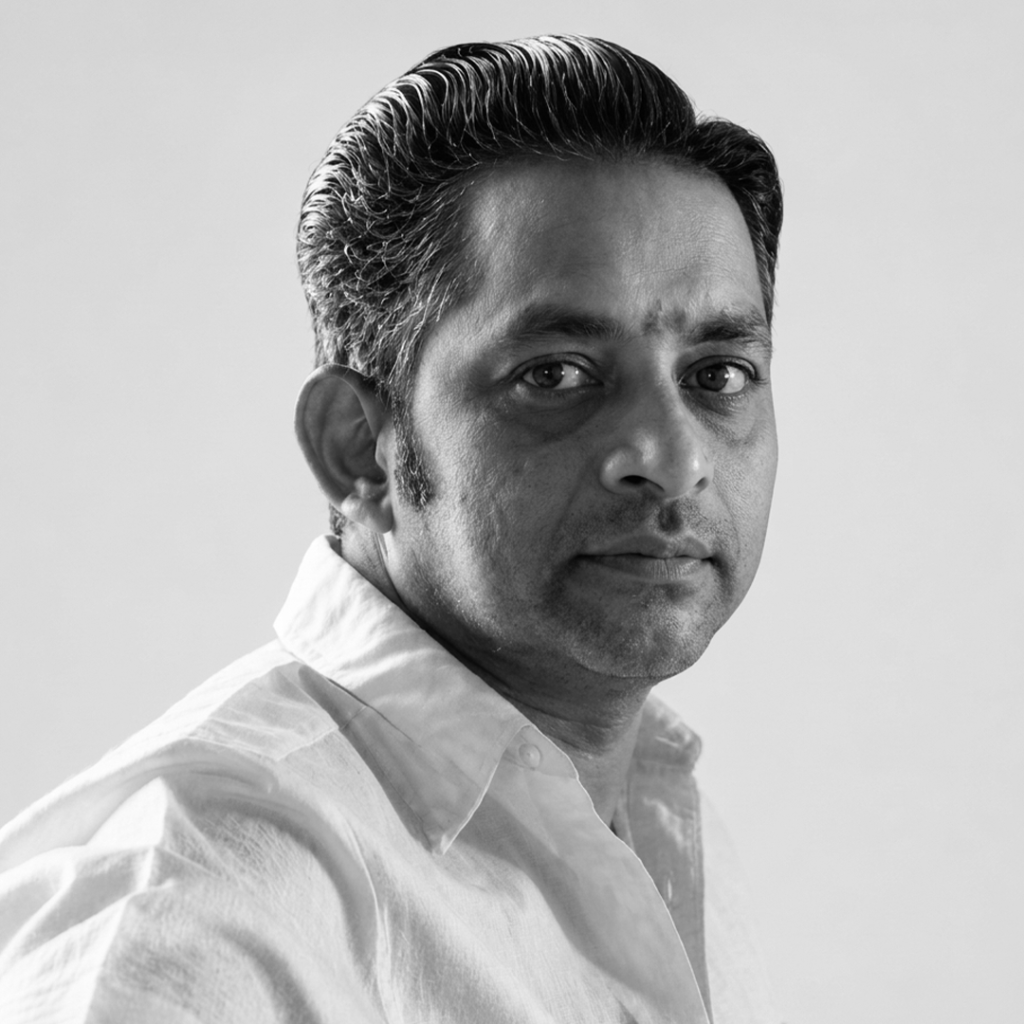
Some artists follow a tradition. Others expand it. M. U. Ramalingam belonged to the latter.
Born in 1933 in Alwarkurichi, Ramalingam entered the world of art at a young age, joining the gurukul of C. Kondiah Raju at fourteen. Under the guidance of the master, he absorbed not only technique, but also discipline, the quiet rigor required to create images that would endure beyond their time.
From these beginnings, he went on to become one of the most prolific artists in the history of Popular Art.
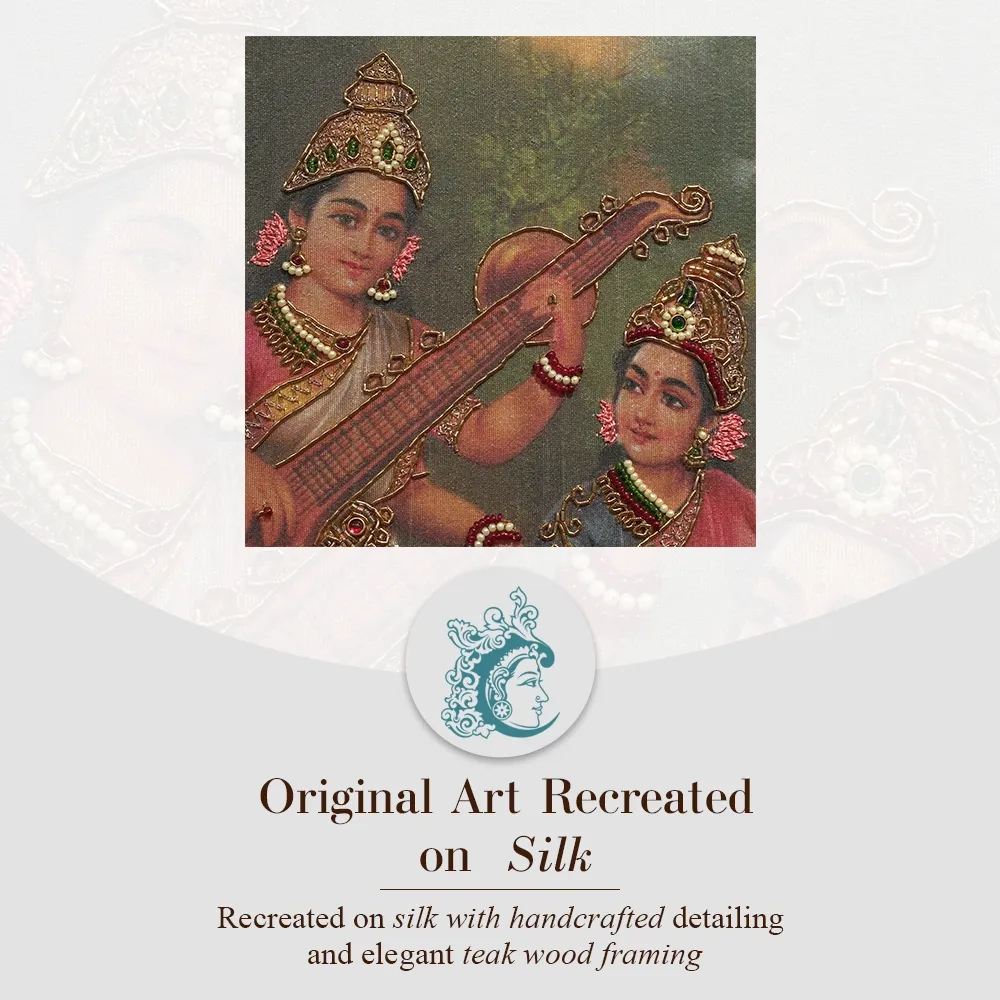
Ramalingam’s work was deeply rooted in devotional imagery, yet it carried a distinctive quality and ability to present familiar subjects in continually evolving ways. One of the central challenges he embraced was the creation of varied and engaging backgrounds, ensuring that each composition felt complete and distinct, even when centred on well-known deities.
Over the course of his career, he created more than 1,400 unique designs, an output that is remarkable not only in scale but also in consistency. His works were widely printed by major presses such as National Litho Press, Coronation, and Orient, reaching homes across regions in large numbers. In doing so, he became one of the most widely circulated artists of his time.
His early works drew from narratives of Muruga Puranas and regional deities such as Meenakshi and Gandhimathi, reflecting a strong connection to local traditions. Alongside these, he explored subjects like Palani Murugan, portraits of women, and images of children, each rendered with a softness that made the divine feel approachable.
As his practice evolved, so did his themes. In later years, he turned to subjects such as Krishna, Vinayagar, Diwali rituals, and Baby Krishna, demonstrating both range and adaptability. This shift did not move away from tradition, it expanded its visual vocabulary.
His journey as an artist is also marked through the way he signed his works. In his early years, he signed in the name of his guru, later adopting a combined signature, and eventually establishing his own identity. This progression reflects not only artistic growth, but also the transition from disciple to independent master.
His first printed work appeared in 1953 for Ambal Coffee, marking the beginning of a long association with the printing world. In the years following the passing of Kondiah Raju, Ramalingam established his own studios, including Chithiraalayam and Lakshmi Pictures, further extending his contribution to the field.
Among his many works, one stands apart for its historical significance. In 1971, he was commissioned to illustrate the life of Veerapandiya Kattabomman, the freedom fighter who resisted colonial rule. These works, created for a government memorial, reflect his ability to move beyond devotional themes into historical narrative, while retaining the same clarity of form.
His legacy did not end with him.
His son, K. R. Somasundaram, continued the artistic tradition, contributing to the calendar art industry. His younger son, K. R. Jayakumar, pursued art as a personal practice, with a focus on line drawings, later exhibiting his works in galleries across cities.
MU.Ramalingam’s contribution lies not only in the number of works he created, but in the way he extended the reach of Popular Art from studios and print houses into homes, memory, and daily ritual.
At Chithiraalayam, his works stand as part of that continuum, not as reproductions of the past, but as reminders of a tradition shaped through persistence, variation, and quiet mastery.