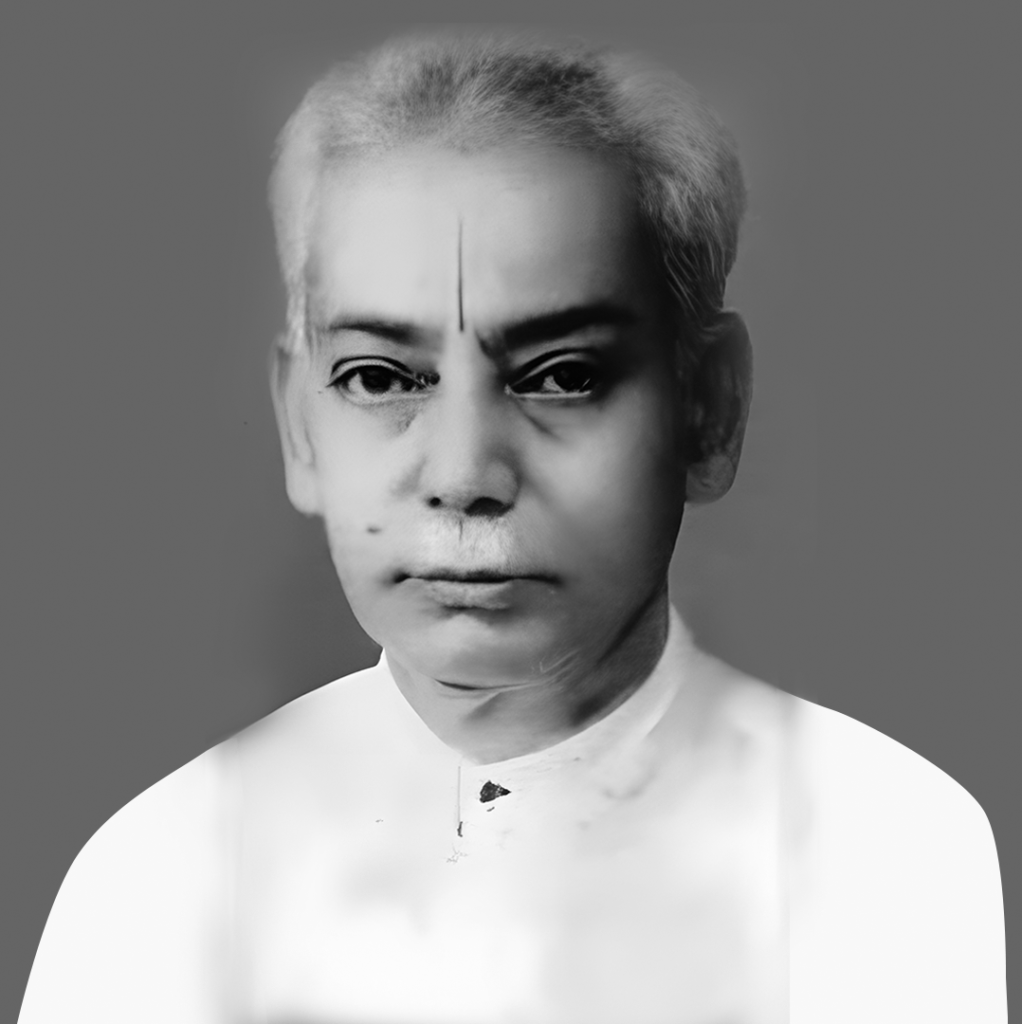
In every artistic tradition, there emerges a figure who does more than create, he shapes direction, nurtures talent, and leaves behind a way of seeing. For the Popular Art tradition of South India, that figure was C. Kondiah Raju.
Born in 1898 in Madras (now Chennai), Kondiah Raju belonged to a lineage where art was not a profession alone, but a continuity of practice. While his father was a practitioner of traditional medicine, his ancestry was closely tied to devotional painting. It was within this environment that he was introduced to art at an early age, receiving training from established artists before formally joining the Government College of Arts and Crafts in 1916. By 1918, he had emerged as a leading student, recognised for his skill and discipline.
His early career took shape in the world of theatre. As part of the drama troupe Sri Original Madurai Meenalochini Bala Sarguna Sabha, he designed elaborate stage backdrops for performances across India and Ceylon. These works required not only artistic ability but also an understanding of scale, narrative, and visual impact, qualities that would later define his paintings.
Following the disbanding of the troupe in 1942, Kondiah Raju settled in Kovilpatti. It was here that his most enduring contribution began. He established his studios, Ambal Arts and later Devi Electrical Studio and gradually shaped what would become a distinctive visual language of Popular Art.
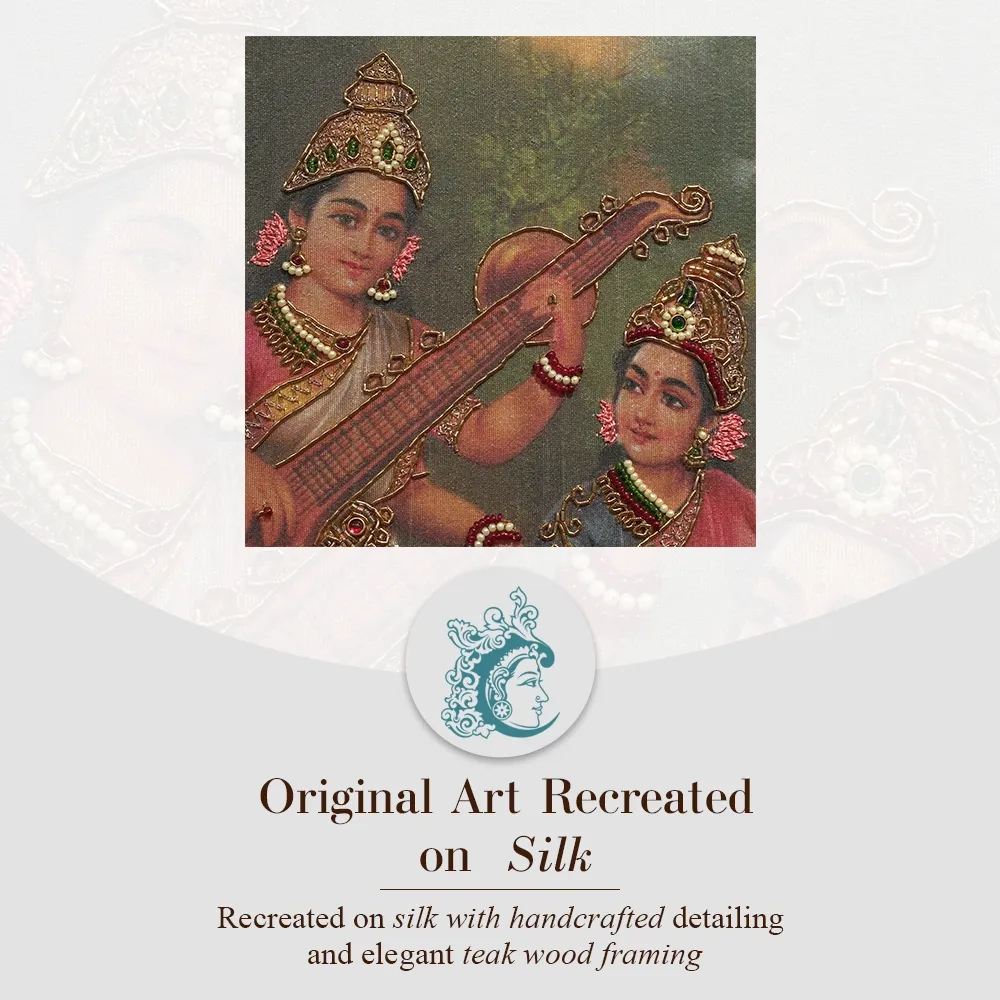
His works, including Gajendra Moksham and Meenakshi Kalyanam, came to be widely reproduced in calendar prints, reaching homes across South India. These images did not remain confined to temples or elite spaces; they entered everyday life, becoming part of daily worship and visual memory.
Yet, Kondiah Raju’s legacy extends beyond his own paintings
He was a teacher in the truest sense, guiding a generation of artists through a gurukul-like environment. Among his students were notable figures such as T.S. Subbiah, MU. Ramalingam, and S. Meenakshi Sundaram, many of whom would go on to define the Popular Art movement in their own right.
In this setting, the relationship between teacher and student went beyond instruction. His disciples lived and worked alongside him, addressing him not as a distant authority, but as “Anna” , an elder brother. The responsibility of caring for this extended artistic family was shared by his sister and her household, creating an environment where art and life were closely intertwined.
Kondiah Raju chose a life of simplicity. He did not marry, dedicating his time and energy entirely to his work and his students. His approach to art was shaped not only by tradition, but also by spiritual influence, drawing inspiration from figures such as Sri Ramana Maharishi.
Today, his contribution can be understood not merely through individual works, but through the tradition he helped establish. The visual language of Popular Art, its expressive faces, balanced compositions, and devotional accessibility, owes much to his guidance.
At Chithiraalayam, the works associated with this tradition are preserved not only as images, but as part of a larger cultural memory.
Kondiah Raju remains central to that memory, not only as an artist, but as a source.