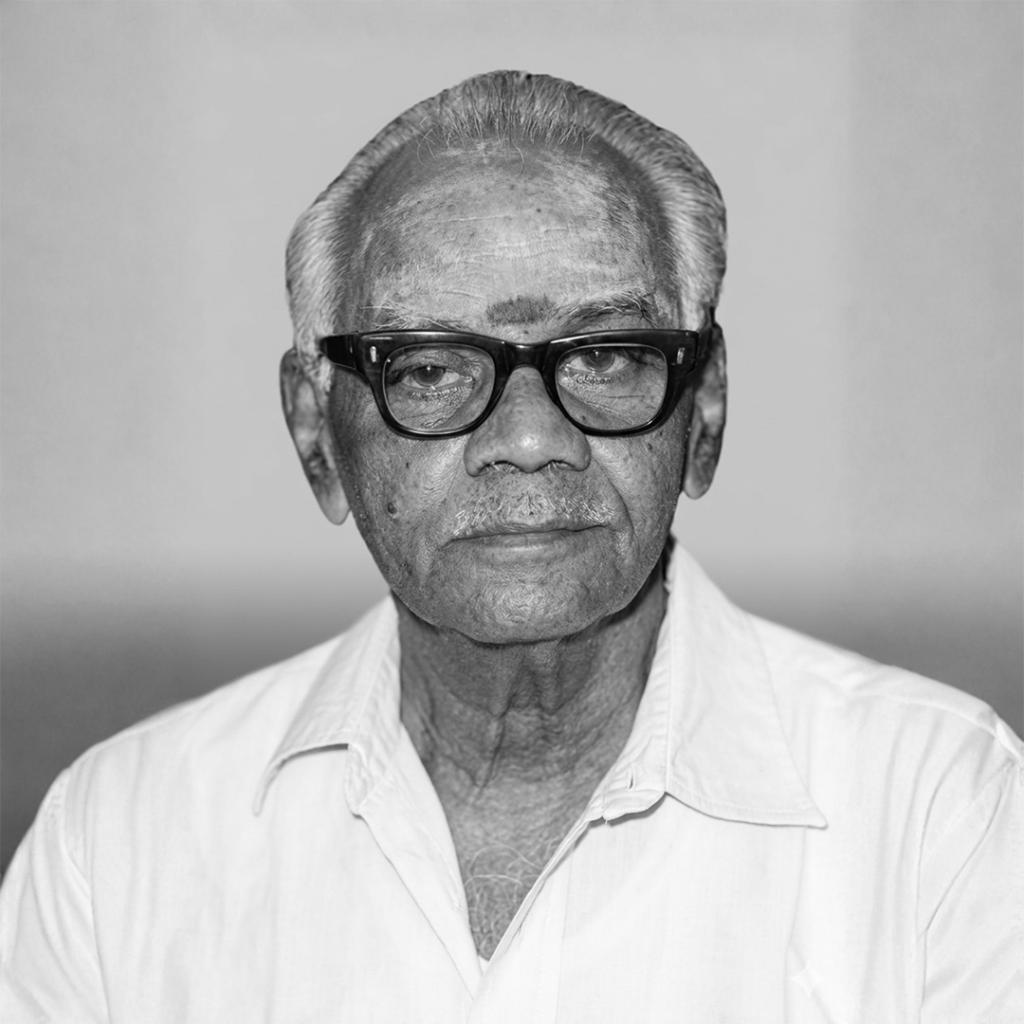
Some artists begin with training. Others begin with curiosity. For T. S. Subbiah, it began with watching.
Born in Tirunelveli in 1915, Subbiah first encountered art not in a classroom, but as a young boy observing C. Kondiah Raju at work. What began as quiet curiosity soon turned into sustained attention. He returned each day, drawn to the process, the discipline, and the transformation of blank space into form.
Recognising this persistence, Kondiah Raju took him under his guidance at the age of fourteen. From that moment, Subbiah became not just a student, but part of a larger artistic journey, joining the drama troupe where art, theatre, and storytelling came together.
Within this environment, Subbiah developed a distinct sensibility. While he learned the foundational discipline of drawing and composition, he also absorbed the theatricality of visual presentation. His early work in designing and assisting with stage backdrops for plays such as Dasavatharam, Krishna Leela and Gnanasundari shaped his understanding of scale, depth, and visual drama.
Over time, he emerged as one of the senior-most and most influential disciples of Kondiah Raju.
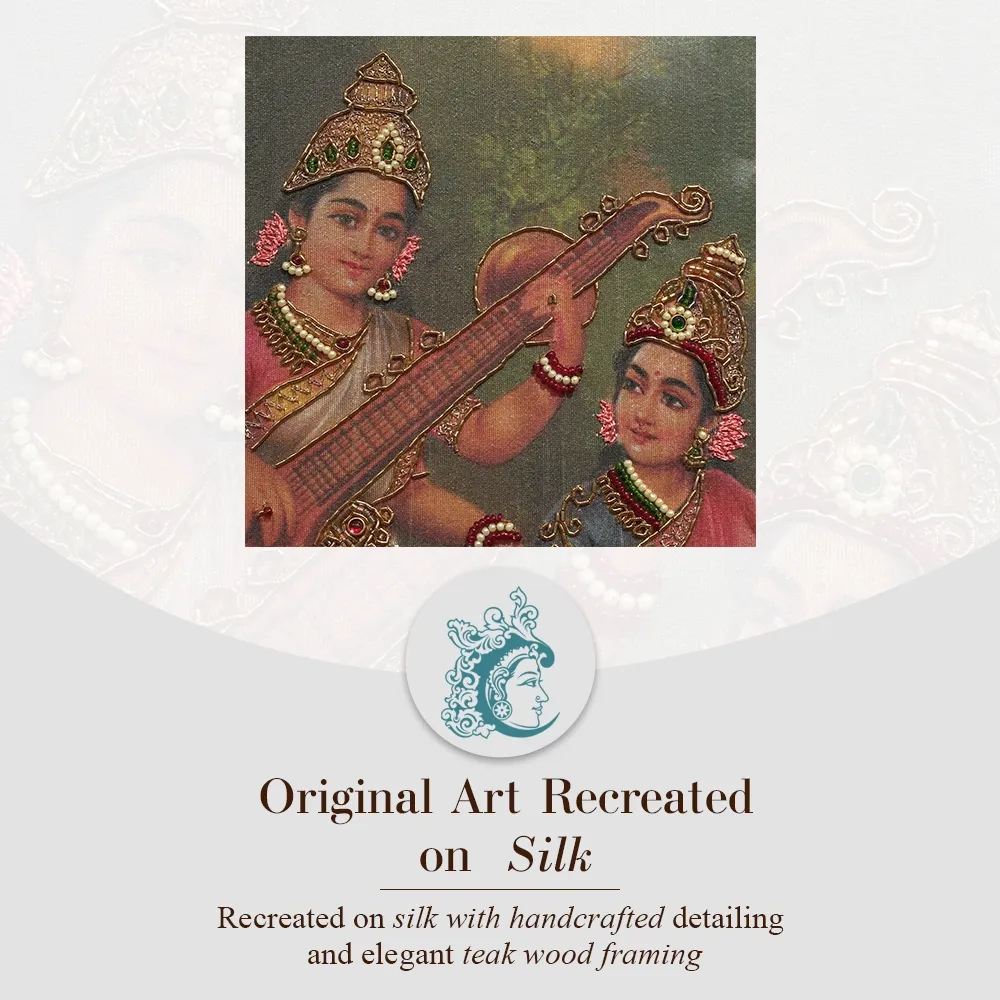
Subbiah’s work is particularly noted for its ornamental richness. His compositions often feature intricately rendered pillars, elaborate jewellery, and carefully detailed decorative elements. These were not merely embellishments, they created a sense of presence, transforming the image into a space that felt both sacred and theatrical.
His background in stage design is reflected in the way his paintings are structured. The use of layered settings, dramatic framing, and carefully composed scenes gave his works a sense of narrative, almost as though the viewer was witnessing a moment from a larger story.
As calendar art gained prominence, Subbiah’s designs found wide circulation. His works were reproduced and framed, entering homes across regions, becoming part of everyday devotional life.
Beyond his own practice, Subbiah played a significant role in extending the tradition. He was instrumental in introducing his nephew, MU. Ramalingam, to the world of art, recognising and encouraging his talent at an early stage. Through such mentorship, the continuity of the tradition was quietly sustained.
In time, Subbiah established his own studio, Saradha Studios, marking a transition from disciple to independent practitioner. Even as he developed his own body of work, his connection to the foundational principles of the tradition remained evident.
His legacy continued through the next generation as well, with his son, S. Marimuthu, who followed in his footsteps and contributed to the visual culture associated with calendar art and print imagery.
T. S. Subbiah’s work stands at an intersection, between discipline and imagination, between theatre and devotion.
At Chithiraalayam, his contributions are preserved not only as individual works, but as part of a larger tradition that continues to shape how the divine is seen and remembered.